
|
|
|
[Majorityrights News] Congressional Research Service reports on Epic Fury aircraft losses Posted by Guessedworker on Wednesday, 20 May 2026 08:42. [Majorityrights Central] Explaining about life and the Reductio ad Hitlerum at The Restorationist Posted by Guessedworker on Wednesday, 13 May 2026 23:04. [Majorityrights Central] Three possible forms of a Ukrainian victory ... and a Russian defeat Posted by Guessedworker on Thursday, 16 April 2026 16:36. [Majorityrights Central] “If America doesn’t learn ...” Posted by Guessedworker on Sunday, 22 March 2026 17:52. [Majorityrights News] Gerdes on the possible sea-change in the Ukraine War? Posted by Guessedworker on Friday, 20 March 2026 21:45. [Majorityrights Central] Some intel on the Islamic Revolutionary Guards Corps Posted by Guessedworker on Thursday, 12 March 2026 23:32. [Majorityrights Central] Defining the borders of the English kin-group Posted by Guessedworker on Wednesday, 11 March 2026 23:51. [Majorityrights News] Jason Jay Smart on the approaching collapse of Putin’s reign Posted by Guessedworker on Wednesday, 11 March 2026 22:42. [Majorityrights Central] Empires, the Chinese Mind, a theoretical nationalism of ethnicity Posted by Guessedworker on Saturday, 14 February 2026 01:54. [Majorityrights Central] Gemini - not an identical twin to ChatGTP Posted by Guessedworker on Friday, 06 February 2026 16:58. [Majorityrights News] Warburg on the impact of Russian forces’ loss of access to Starlink Posted by Guessedworker on Friday, 06 February 2026 10:17. [Majorityrights News] Toast à la Little Saint James Posted by Guessedworker on Wednesday, 04 February 2026 23:48. [Majorityrights News] Southport, migrant hotels, the national flag, and Amelia Posted by Guessedworker on Monday, 02 February 2026 00:14. [Majorityrights Central] Argot Rosetta Stone For GW/Heidegger/Etter Posted by James Bowery on Saturday, 31 January 2026 17:18. [Majorityrights Central] ChatGPT redux Posted by Guessedworker on Thursday, 29 January 2026 01:11. [Majorityrights News] The national revolution in Iran cannot be stopped Posted by Guessedworker on Saturday, 10 January 2026 00:38. [Majorityrights Central] Into the authoritarian world redux Posted by Guessedworker on Saturday, 03 January 2026 17:56. [Majorityrights News] Moscow Times: Valdai residents report no sign of drones attacking Putin residence Posted by Guessedworker on Tuesday, 30 December 2025 11:33. [Majorityrights News] Paul Warburg on America’s self-destructive new strategy Posted by Guessedworker on Tuesday, 16 December 2025 12:32. [Majorityrights Central] Thoughts on Mark Collett’s strategy for nationalism in the British future Posted by Guessedworker on Friday, 24 October 2025 15:01. [Majorityrights Central] Living in the Jewish Mind: Part One Posted by Guessedworker on Monday, 29 September 2025 09:37. [Majorityrights News] Nationalism on the Kramatorsk front. Posted by Guessedworker on Saturday, 20 September 2025 15:55. [Majorityrights Central] And Chat GPT just the same Posted by Guessedworker on Monday, 08 September 2025 15:18. [Majorityrights Central] Grok the modern nationalist Posted by Guessedworker on Sunday, 07 September 2025 19:14. [Majorityrights Central] Principles, parts, processes of ethnic nationalism, Part 1: inflection? Posted by Guessedworker on Thursday, 31 July 2025 12:03. [Majorityrights Central] A window onto a world of Russo-Chinese hegemony Posted by Guessedworker on Tuesday, 08 July 2025 20:47. [Majorityrights Central] The DT takes the first step on the journey Posted by Guessedworker on Thursday, 03 July 2025 05:02. [Majorityrights News] Iranian comment machine switched off by Israeli bombs Posted by Guessedworker on Wednesday, 25 June 2025 09:07. [Majorityrights Central] After Casey and the ensuing child sexual exploitation inquiry Posted by Guessedworker on Tuesday, 17 June 2025 00:21. [Majorityrights News] 4 minutes and 43 seconds of drone warfare history - updated Posted by Guessedworker on Wednesday, 04 June 2025 16:50. [Majorityrights Central] An approaching moment of Russian clarity Posted by Guessedworker on Sunday, 11 May 2025 12:34. [Majorityrights Central] “It’s started. You ignored us. See where it’s going to get you.” Posted by Guessedworker on Sunday, 04 May 2025 00:42. [Majorityrights News] Another dramatic degradation of Russia’s combat capacity Posted by Guessedworker on Wednesday, 23 April 2025 08:49. [Majorityrights Central] A British woman in Ukraine and an observer of Putin’s war Posted by Guessedworker on Monday, 14 April 2025 00:04. Majorityrights Central > Category: Books “There is no such thing as society” “There is no such thing as society”In that act of being mistaken, anyway - let’s leave a way out for people understandably reacting to the Jewish misrepresentation of the terms, “left” and “post modernity”. Internal Relation and EmergenceYou don’t have to take a position which places your people (praxis) as the central gauge. You can go on like a right wing fool for Jews and place a “quest for truth, facts and universal foundations” (and “inequality” even?) above all - even wreck your own people in that “noble quest;” but you’d be an unnecessary fool, a dupe for Jews and Jewish thinking in so doing. You don’t have to put our people at the center - but you can, as factual verification and reality checking are available in an instant if you are not dealing with reality; whereas the principles upholding our people took many centuries to create and are much more precious and difficult to reconstruct, if ever they can be. It isn’t necessary to place facts at the center - people are born of facts and if afforded correct principles, proper agency and accountability, our people will come to continually adjust their interests with the facts. Hence, the right’s whole arbitrary-making quest for facts and episodic verification at the expense of principled interest in our people is the height of folly. Chasing mere facts and perfect verification away from “faith” in our people will tend to take them into runaway, beyond our people’s systemic interests - as opposed to taking the White post modern turn into its facilitation of the preservation and reconstruction of our people - where the facts are ensconced in the sufficiently deep emergent reality of our people’s systemic history to afford re-framing at their authentic place in relation to our human ecological system. Right and Altright reactionary fan club - scavenging the wreckage of continued reaction.The right, “alternative right”, those in their orbit, lay in wait as vultures for things like GW’s latest surprise: as I stepped aside from a discussion of British politics, he applied the theoretical wrecking ball again to “THE left” and “post modernity” at their behest (he isn’t so lame as to have to do it for himself); ill-prepared for the surprise in that context, I put up a threadbare defense against what I’ve come to see as a part of GW’s autobiography - “champion of the right, universal foundational unifier against the left’s class divisiveness.” GW - working class hero who sees their classification as a critical problem of imposed nationalist division.If you are coming here, like myself, chances are that you appreciate GW’s ability - you delight as he wields a scalpel on behalf of White/ethno-national sovereignty, more often a wrecking ball to the pretenses of academia and scholarship that are working against it. We value this, want him to continue, want him to be satisfied with his part and his contributions. What follows here is going to show little appreciation for that, which is abundant and shows forth in spontaneity for the surfeit of his intelligence - often yielding indispensable flourishes and insights that I myself cherish. This piece is rather an ungrateful piece in that regard, given that he has stood by me as I set about chartering a new platform for Majorityrights; and I sent scurrying many who had deep appreciation and respect for him as well; but it is neither for myself nor “his own good” that I proceed not feeling particularly guilty about that - nor is the matter of face saving a pressing matter for either of us - the sake is proper theoretical grounds, which is always my central motivation. Still this will appear rather like a hit piece - as it takes aim, focuses on the clumsier props of GW’s worldview, philosophical underpinnings and aspirations - not on better sides and ideas, which will emerge cybernetically in balance of fact. If you are coming here, you probably appreciate and identify with GW’s rogue path: as a completely disaffected outsider to the academic fray, he early on rejected the nonsense coming out of there, particularly from fields dealing with social issues. And you delight along with him as he continues to apply the wrecking ball to their cherished liberal ruses under cover of “The left”, their wish to open important borders and boundaries, to bring down individual merit, to drag others down into primitive individual and group failure - instinctively, you sense him taking down liberal bullies who are smug enough to insulate themselves from the consequences of the unsupportable concepts of social “justice” that they wield against those native White populations least responsible for others problems, most likely to suffer from liberalism and least likely to gain from the applications known as “The Left” - applications which can recognize just about any collective unionization of interests except one kind - White. Certainly a (((coincidence))). Most people who’ve come here, myself included, have also experienced mystification over GW’s not being satisfied with that. You have been at least temporarily mystified as he evades into the arbitrary recesses ever available by the empirical philosophy that underpins modernity; and as he continually applies its wrecking ball, secure in the faith that it will leave in its wake only that which is fine and good; a wrecking ball summarily dismissing scholarship, conceptual tools and principles that others set forth to guide social action. I have been stunned as he sends the wrecking ball my way as well, summarily dismissing even carefully culled and profoundly warranted philosophical ideas, eminently useful conceptual tools and important rhetorical positions that I have geared to his same White ethno-nationalist interests; while his modernist philosophy willy-nilly casts me into the role of the “lefty academic” foil in key moments. I am no longer mystified by this. A reactionary position is mostly retreating (evading) and attacking - whatever looks like an enemy or Trojan horse - but for its instability, it is susceptible to chase after the red cape. An early contentious streak in the autobiography over-reinforced by circumstance, ability and admirers.GW is wonderful, we love GW, but like the rest of us, he is not perfect. There is a residual strain of contentiousness in his autobiography that stems from his early disaffection and precocious disregard of liberal prescriptions coming from academia. It’s a part of his autobiography that he takes a great deal of pride-in. It is also socially confirmed enough so that he continues to chase its red cape known as “THE left;” and keeps applying the modernist wrecking ball to any concepts the tiniest bit speculative in circumscribing social interests; or adopting any terms also used by liberal “left” academics - even if used in different ways, he will understand it in THE left way that he is familiar with - and summarily dismiss it as such or apply the wrecking ball. Unlike most people disaffected of liberal academia, he is not of the working class sort content to shake his fist at academic pomposity, to find solace in a beer and the pragmatism of his working class buddies, allowing the union misrepresentatives to negotiate his interest with their fellow liberals of academic background; nor is he content to join in with the White collar and middle class who typically denounce the worst of academic socialists as unrealistic, while they go along with the liberal anti racism of the academe, signaling their one-upness to the lower classes by denouncing as backward superstition whatever defensively racist discrimination they might even require. He does share a few things in common with the typical middle class perspective however. Naturally, he has a bias toward viewing his success in positivist terms, as having come about from his gray matter and personal initiative, not because he derived any benefit from artificially imposed social bounds against competition and to circumscribe cooperation. Though he can relate to the working class “xenophobia”, he maintains that their maintenance of who they are among a collective “we” (i.e., particular native European nationals) and their choice of whom to intermarry with (same particular native European national) is something that should and can emerge naturally from their genetics - an identity that will emerge naturally, provided they do not have liberal, Fabian and Marxist ideas imposed upon them; the last thing GW wants is to impose another artifice upon them, one which he believes could divide them against their upwardly mobile English brethren, and in turn, divide the middle class even more against them. I.e., the “left” and “right” is normally taken as an economic divider and unifier of class, not a racial nationalist one as I am proposing. The middle class, as much as any, might be reluctant to ‘get it’ and not identify with a “White left,” in which case we would be back to the divisive issue, not the uniting issue that both GW and I seek - we may not agree on terminology but we do agree on native nationalism. Thatcherite obectivism a means for personal advancement and foundational unification of nationalism.In fact, GW is a native nationalist, deeply offended by the class system which has long hampered English unity. Thus, he is not content to disavow the worst of liberal and Marxist academics, writing-them-off as the idiots that they are, while leaving the working class to the fate that liberalism will bring to them, and, if left unabated, to all of us eventually. Like a few, more ambitious among us, he set about to get things right, to open a platform for White nationalists, even before it was quite the immanent practical necessity that it is now. He aspires to identify the ontological connection between all English classes which, if unfettered by artificial constructs, would have them acting as native nationalists in loyal unanimity to their interests. In that regard, Margaret Thatcher represented to him a liberating moment from the incredibly burdensome artifices of liberal, Fabian and Marxist Left union delimitations and by contrast an opportunity to unite as nationalists on natural positivist grounds. Normal first reaction that doesn’t take Post Modern turn as it fails to see liberalism flying under left colors.Indeed, most anybody of this ambition, myself included, who cares about our race and its ethnonational species, starts out in reaction to the absurd, contradictory and destructive liberal rhetoric coming out of academia and reaches to grab hold white knuckle to foundational truths, particularly scientific fact, which cannot be bamboozled by the rhetoric of liberal sophistry (which we later come to recognize as more often than not, Jewish in original motive). And we do grab hold white knuckle - that is to say, scientistically, in rigid over and misapplication of hardish science to the social realm, as we cannot trust the social realm, its rhetorical caprice if not deception - its ongoing disordering effects that apparently threaten to rupture social order anew with every agentive individual. Coming from a non-Jewish, Christian cultural perspective, where our bias starts, if not Jesus, we first liken ourselves to Plato and then modern scientists seeking to gird and found our place and our people’s place, whereas “they” are Pharisees and sophists, wielding the sheer rhetoric that we are going to debunk with our pure, native ability and motives. In a word, we are going to do science against their dishonest bias against us - they are indeed being deceptive and biased on behalf of unfair people; we see it as our objective to establish universal foundational truth that will be unassailable to this sophistry. That is the normal first reaction of a White person who cares about themself and our people - it was mine and it was GW’s - a nascent White nationalist in response not only to the anti-White discourse coming out of the university, but in response to the very frame of the discourse - that is to say, taking on the frame [Jewish and liberal social stuff and lies versus White science and truth] - against accusations of privilege, racism and exploitation, we sought pure innocence in truth beyond social tumult and disingenuous rhetorical re framing. We (understandably) acted with absolute revulsion to anything like social concern and accountability - why should we be accountable to ever more alien imposition? - itself neither offering nor asking for an account sufficient to maintain our EGI - and where our people are eerily unconcerned or antagonistic to our people as well, we are only more compelled to take on the task ourselves - to pursue pure warrant. Our first reaction to the liberal chimera called “THE left” is: “I” noble servant of postulates - theorems - axioms - upon universal foundational truth.” Beyond our people’s relative social interests even, we must save ourselves from the lies of “The left” (never minding that their first lie is that they represent our left) and found our moral/ontological basis where Jews, other tribalists and our selfish liberals, who only care about themselves, can never again manipulate it. We hold white knuckle, rigidly, in reaction to Jewish sophistry. History will show that our people who pursued and secured sovereignty, health and well being found a philosophy advanced of that - competent and able to secure their social interests. They’d taken the White Post Modern turn from this reactionary position. For reasons unfolding here, including reasons of his personal autobiography, GW has yet to appreciate and take the post modern turn. Personal ability and interpersonal circumstances have facilitated his carrying-on in a typical first philosophical position of an amateur outsider in regard to academia - the epistemological blunder of “they are just sophists who provide nothing but nonsense while ‘I’ and my pure thoughts in relation to ‘theory’ am going to set the world aright” - an epistemological error in the relation of knower to known that is born in reaction and puerile hubris, carried on by being strong, smart enough to persist long after most people would shrink back from the signs of its limitations; going further uncorrected as it has been endorsed by “no enemies to the right” (a dubious principle, if there ever was one); it has grown into a surprisingly big and audacious ego wielded as a wrecking ball against “post modern philosophy.” We are supposed to rest assured on his faith that in the aftermath of wreckage, that the emergent qualities of his mind are all that is required besides the occasional foil to play off of in order to clarify and carry the modernist program forward to unshakeable, universal, foundational truth - unassailable to any social reconstruction. Never mind that we are already willing to agree upon most of the fundamental rules that he would seek - our agency is not necessary if it is going to suggest anything like planned social construction of systemic defense. No, that’s all impure stuff to be cast aside; and by contrast of true Platonic form, if you are freed from that ignorance and come to know the good he will secure, you will do that good. He is not satisfied to simply negotiate, reason-things-out and reach an understanding among his people, he is not even particularly concerned that it won’t be a damn bit of good if people can’t understand his philosophical yield - he wants to secure that good on ontological foundations beyond praxis - beyond the capacity for manipulation. Most sophomores abandon this, their freshmen objective, as not only obsolete philosophy, but in fact, come to recognize it as destructive philosophy - a destruction which GW continues, with tremendous faith, without need of Aristotelian compass, that tremendous confidence to persevere where Wittgenstein failed. The boomer generation - libertarianism and egocentrism.The likes of Bowery and GW will be slower, if ever, to make the turn in direction, not because they are stupid, of course, quite to the contrary, but because they have the mental horsepower necessary to keep patching and operating the antiquated and obsolete technology that is modernity; and stem predilection both motivates them and enables them to do that; they are more self sufficient, less immediately reliant on the social (why carry others weight?); more confirmed by females by being reliable as such (concentrating on how to do things, not stepping on the toes of females by asking questions of social control - as long as you are at one end of the competition you are OK - liberal or the right wing end); confirmed by non academic workers in their more pragmatic concerns; and confirmed by right wingers in their penchant for anti-social theory beyond social manipulation - exactly, they are also slow to take the turn, of course, because they have an understandable lack of trust in liberal-social narratives; this unwillingness to suspend disbelief may be increased inasmuch as they have benefited as baby boomers, less harried for their identity in the parts of their life-span experienced prior to the culture of critique and in their personal initiatives after its reprieve - in Bowery’s case, with aspects of the objectivism behind Ron Paul’s libertarian “revolution”; and in GW’s case, during the Thatcher years (Thatcher’s initial backers having discovered her reading Wittgenstein’s cousin, Hayek, who obliviously carried forward upon the Tractatus) - years of brief, partial liberation from liberal-left union fetters - “there is no such thing as society” - in either case, a false friend facilitated as false opposition - viz., an expression of steered objectivism derived of Austrian schools beginning with Wittgenstein. 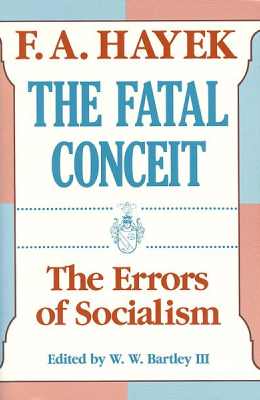 The title is a projection of objectivism. Subtitle: look who else is reading it. The title is a projection of objectivism. Subtitle: look who else is reading it.What is confirmed to me - in a roundabout way, when GW dons his powdered wig, grabs a quill pen, does his best John Locke or whatever voice serves, and says oh, “that’s just Aristotle and his rhetoric,” “all of the good ideas are coming from the right”, “based in nature, none of this praxis stuff”, says that he “never loses an argument against academics”, etc., then continually re-applies radical skepticism of the empiricists and their forerunners - is that he is showing an ego driven and confirmed desire to carry-on the “pure” modernist project; viz., in his ontology project and his destruction of everything in its path, even treating Aristotle and William James as utter morons, GW is revealing a vain desire to do something all alone, like a combination of Wittgenstein’s Tractatus Logico Philosphicus and Heidegger’s Being & Time: “The world is everything that is the case” meets “the worldhood of the world” - without the post modern implications of the latter. All that is required is the emergent qualities of his mind to set the world’s ontology aright - it will be “unassailable” by liberal, social, “left” rhetoric. His reaction, confirmation and penchant for empirical verification against Jewish rhetoric has apparently caused him to disregard the post modern turn that was occuring also in Heidegger’s philosphy, albeit in Heidegger’s case, in that somewhat rigid, German way (which I find endearing). GW appreciates Heidegger, so why does he not move forward from 1927 and why does he retreat to 1921 and the Tractatus? That he consders “OF being” the better starting point than Heidegger’s “There Being” provides a clue to ego centrism and Cartesian anxiiety - he not only proposes the reconstruction of the Cartesian starting point, “Of being”, but proposes it as an exclusive position, not even taking hermeneutc turns with Heidegger’s non-Cartesan starting point, “There being.”  “Unassailably” proclaiming that “The world is everything that is the case” “Unassailably” proclaiming that “The world is everything that is the case”Whereas Wittgenstein himself was forced to yield-to, if not recognize the necessity of, the post modern turn - so much so that he was embarrassed by his effort at a complete ontology in The Tractatus Logico Philosophicus - having proclaimed its logic “unassailable” at once upon completion, he later repudiated it, even took to referring to its author as if a different person. The Motivation for Post ModernityPart of the craze for “post modernity” is that people (correctly) sense that modernity is destroying their differences, their traditions, their ways of life, their people and their very lives. And yet they frequently found traditional societies destructive as well. Therefore they were happy to have not only backing of cross cultural studies, vouching that different ways of life are valid, but also some confirmation from the very foundational math and science which modernity pursued to an apex that finally turned back on itself. Kurt Gödel had demonstrated that a theory of any complexity could not be both complete and unambiguous. Neils Bohr had priorly announced that there is no instrument fine enough to resolve the wave/particle distinction. Heisenberg’s uncertainty principle elaborating from that was subtler still - that the observer is engaged in interaction and has reflexive effects upon that which he observes. Confirmation of Aritstotle’s Praxis and suggestion that it should be the radical basis of assessment, not pure objective facts.These findings confirmed Aristotle’s premises as set forth in Nichomachean Ethics - on the nature of Praxis - people are in reflexive relation, mostly requiring a degree of practical judgement as they are less predictable than the theoretical causality which the hard sciences pursue. It also would suggest placing praxis more in the center than theory - i.e., a socially based perspective where people are the arbiter, as opposed to “I think therefore I am” in relation to mere, indisputable facts and non-interactive third person behavioral units; a pursuit even outstripping the subject ultimately in favor of fixed theoretical facts - the Cartesian relation (pursued non-relation, as it were) of knower to known. Vico was first to take the hermeneutic turn against Descartes, to bring ideas into historical context, the relation of knower to known into the social world of praxis A relation knower to known other than the Cartesian model is required by modernity’s recognized failures and impervious destruction. Those who care about people, who see the destruction of Descarte’s “relation” of knower to known, understand the wisdom of Aristotle, and realize that Vico - Descartes’ first major critic - was in fact, proposing the taking of theoria into praxis: i.e., correctly placing people and praxis at the center of his world view. He was setting forth the historical, hermeneutic world view, the post modern world view. And, in turn, those who understand Heidegger will see that he was following in that same direction, which may be called “existential” and which is centered in praxis - the social world. The White Post Modern turn is, of course, the best and most moral perspective for advocating people - Whites especially - Jews don’t want that and so they fool the uneducated masses and most of the educated masses as well by reinterpreting the terms by which people - viz., White people, might understand this - and they get them to react against didactic misrepresentation. That is, they are getting them to react in aversion to what is good and healthy in racial advocacy by having made it didactic in misrepresentation - e.g., the highly sensible Post Modern is presented as “dada” (whereas I have secured its sensible form in White Post Modernity). Bowery and GW were impelled on, for the didacticism of the (((liberal-left - contradiction of terms))) and for the (((misrepresentation))) that was this false opposition and its false promise to liberate us from The left, among other reasons. Objectivism, the neoliberalism and libertarianism of the Austrian school of economics, Thatcherism, is merely a false opposition that (((they))) set up against “(((The Left))).” It is a product of late modernity, derived of the Vienna School of Logical Positivism, which in turn was derived of Wittgenstein’s Tractatus Logico Philosophicus. Again, that was Wittgenstein’s attempt to set-out a comprehensive and “unassailable” ontology - “The world is everything that is the case.” He would later say that the Tractatus was “not a very good book”, lest he be mistaken for one not recognizing that those who had taken the post modern turn had left this philosophical quest behind. Nevertheless, the Austrian school of logical positivism founded upon the Tractatus lived on through his cousin Hayek (who Thatcher was discovered dutifully reading); it was then taken up by von Mises et. al, who would conveniently and explicitly adopt this no-account modernist program against any one of subsequent generations who was the least bit reflective, who had any social complaints about how they and their people had been left without social capital after this generation of egocentric locusts devoured all social capital in their path. Waiting generations of right wing reactionaries, ensconced in their well protected Internet bubbles, were ready to look up to these libertarians for their lack of social concern, conveniently blaming the socially conscientious of prior generations for the problems - “The Left”, where not “hippies”, were the ones asleep at the wheel and leading us over a cliff, “but not the objectivists” and not (((The YKW))). One-up intransigence of boomers meets generation Internet bubble for a right-wing cocktail, silencing socially conscientious voices between.Because of GW’s unwillingness to trust anybody but himself, he takes recourse in the one aspect of the post modern turn where his first person account of all the world’s foundations might be claimed - emergentism. He has a problem, however, when I say that the world still interacts. He has to take recourse to the absurdly arbitrary claim that “life doesn’t interact.” Emergentism, in fact, is one of the key contributing factors to the post modern turn - it challenges the reductionism and fixedness of the modernist ontology project in an important sense - the emergent whole being greater than the sum of its parts means that significant referents are changeable in complex systems, thus qualifying Bowery’s criticism - “there is either a referent or there is not” - as this charge must yield to the fact that facts can be re-framed as they emerge physically, as they are designated by individuals and as they emerge in social consensus. And yes, what emerges still interacts in a myriad of ways. 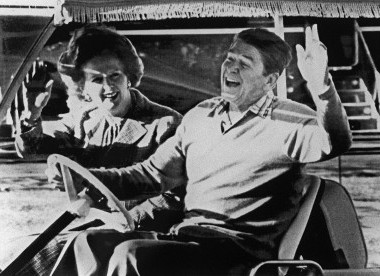 Gen Xer’s were a bit late for the ride Gen Xer’s were a bit late for the ride“There is no such thing as society”Their lack of faith in the social narratives as they are applied by YKW is understandable, the faith they show in the guiding principle of modernity to leave only what is fine and true in the wake of their wrecking ball is not. There comes a time to suspend disbelief. To draw a hypothetical boundary around our people is as good a time and place as any. “Wise men see lines and they draw them” - William Blake. And its not so hypothetical. Perhaps because their boomer generation was early in line and they were intelligent enough to position themselves by means of objectivism for a deck chair on the higher end of a sinking Titanic, they can take some solace in writing-off those who might be going under first, if it does go down, as hazards of nature, having not acted “naturally” in EGI - Bowery in particular, being motivated by an affinity for the individuality of northern Europeans, abandoned ship (MR, anyway) when Dr. Lister and I began raising criticisms of “individualism über alles” and raising social concerns against that. In fact, for this reason, Bowery issued an ultimatum (“either him or Lister”) which defaulted to Graham’s more social side, upon which Bowery expressed his “revulsion” for Majorityrights.
I can say with some authority that one of the strongest positives of running a dissident blog in our blighted age is coming into contact with so many truly exceptional people. One of these, for me, is Polish-born writer Tadeusz Korzeniewski, who has kindly tendered substantial assistance to me for some of the work I have done here down the years. Now I have the opportunity to repay him a little by mentioning his book To Wyoming, now available on Kindle. In 1991-1998 Tadeusz traveled across North America. In 2013 he published a book in Poland, Do Wyoming, addressed to ethnic Poles. The English version of the book is made for ethnic Europeans. I asked Tadeusz to expand the official blurb, which he has done; and which I reproduce here. Below the fold is a sample chapter to whet your reader’s appetite.
Admirers of the ferociously correct I Bismuth can now enjoy the book-length version of his struggle for Tolerance. The Good Anti-Racist is available on Kindle at Amazon. The blurb explains:
The forces of evil will enjoy every word of it.
GW has expressed the constraint:
DanielS has expressed the constraint:
An approach offered by John Harland is to admit the historicity of Jesus in His essential mythic image as descendant of God evidenced in his own over-ruling of texts with direct bodily connection with God as Father, but to deny the historicity of the extant texts—deny them as yet another means by which dastards attempt to interpose themselves between the God-heritage of individuals and their Father, in spirit and flesh. Ridicule of Harland’s own editing of the texts to suit his view may be conducted only at the sacrifice of the two constraints establishing the context of this presentation. Offer a superior approach if you don’t like Harland’s—either that or declare folly the entire effort to connect with the spiritual force of Christianity. Click this link for a pdf document containing part of Harland’s account starting with “The Germans” (in the anthropological sense meaning what many identify as Celtic and Nordic pagans of the pre-Christian era), “The Catholic Church Promotes Judeo-Christianity”, “The First Breaking Apart of the Church Serpent” (regarding Henry VIII and Martin Luther), “A Further Break From the Serpent” (regarding the establishment of America), “The Strange Phenomenon of ‘Money-Mad’ Americans” (regarding the closing of the frontier and replacement of Nature and Nature’s God with money-based “culture”), “The American Dream” (the commodification, by conspirators, of the American spiritual renaissance), “The German Reich” (the parallel processes occurring in what became the nation state known as “Germany” during the 1800s leading up to WW I), “The World Picture After WW I” (the situation leading up to WW II) and the concluding section of this pdf document is “The Second World War”. The entire book is “Word Controlled Humans” by John Harland, ISBN 0-914752-12-X available from Sovereign Press, 326 Harris Road, Rochester, WA 98579 (with which I have no business or personal relationship).
 In this fascinating narrative advanced by Scottish Theologian Alexander Hislop, all supra-scriptural practices instituted by Catholicism (naturally) are attributed to insidious expression of the evil Babylonian Mystery Religion:
by Graham Lister Agents, of both a collective and individual nature, have an interest in some state of affairs if it enables them to achieve their wants. But it is quite another thing to be aware of this interest; that entails both an ideological and imaginative transformation that allows that interest to be fully visible and informs an agent on how to potentially realise its interest. Often within our political discourse a restriction upon the exercise of a given interest or frustration of a want will be expressed in the idiom of injustice. Precisely what are justice and injustice are obviously both, at least partially, ideologically and imaginatively forged concepts. For the ancients justice typically occupied a primary place in the pantheon of virtues. It was often conceived as the master virtue, the one that orders all the others. Plato tells us in The Republic, a just individual is one in whom the three parts of the soul - reason, spirit, appetite - and the three virtues associated with them -wisdom, courage, moderation - stand in the right relation to one another. In the just city, a precisely analogous situation prevails each class exercises its own distinctive virtue by performing the task suitable for its nature, and none interferes with the others. Most philosophers have rejected the specifics of Plato’s view. Almost no-one today believes that the just city is one that is rigidly stratified with a permanent ruling class, a permanent military class and a permanent working class, whose lives differ from one another in all major respects. Yet many philosophers have retained the belief that justice is not simply one virtue among others, but enjoys a special status as the master or meta virtue. A version of this conception informed Rawls’ treatise, A Theory of Justice, in which he claimed that “Justice is the first virtue of social institutions, as truth is of systems of thought”. By this he did not mean that justice is the highest virtue, but rather that it is the fundamental one, the one that secures the basis for developing all of the rest. In principle, socio-political arrangements can display any number of qualities - for example, they might be efficient, orderly, harmonious, caring or ennobling. But the realisation of those possibilities depends on a prior, enabling condition, namely, that the socio-political arrangements in question be just. Justice is thus the first virtue in the following sense: it is only by overcoming institutionalised or systemic injustice that we can create the ground on which other virtues, both societal and individual, can flourish. If Rawls is right on this general point then when evaluating socio-political arrangements, the first question we should ask is: are they just and more importantly for whom are they just? To answer, we might build on another of his insights: “the primary subject of justice is the basic structure of society”. This statement orients our attention from the great variety of immediately accessible features of social life to the deep grammar underlying them, to the institutionalised ground rules which set the basic terms of social interaction. It is only when they are justly ordered that other, more directly experienced aspects of life can also be just. Certainly, Rawls’ specific views of justice - like those of Plato - are problematic. However, it may be useful as a starting point if we endorse his basic idea that the justice is a meta virtue and that our reflections on justice should concern the basic structures of a community. To explore this approach I will examine the Anglo-Japanese author Kazuo Ishiguro’s thoughtful and beautifully written novel, Never Let Me Go.
by Graham Lister
Nationalism has a rancid stench. It has been thought pivotal to some of the worse horrors of recent human history, yet it will not go away. If, as a character from Joyce’s Ulysses suggests, “History, Stephen said, is a nightmare from which I am trying to awake” then one of the most persistent phantoms haunting our nightly terrors is nationalism, particularly in the conditions of our freshly constructed ‘global’ village, built primarily through the medium of neoliberalism (the most successful ideology in history). In the UK thinkers as wildly different as the ‘deep-blue’ conservative Roger Scruton and the Marxian theorist of nationalism (and Scottish nationalist) Tom Nairn both write with perceptive insights into the phenomena of nations and nationalism. Like any other ism, nationalism has its own internal spectrum. And due to its overall plasticity nationalism is hard to place within any conventional political axiality. It can take almost any political form and find support from anywhere in the ideological firmament – witness the radical-chic associated with various decolonization struggles – or indeed the burbling of the blessed Saint Michel (of Foucault) over the exciting new ‘political spirituality’ unleashed by the Iranian revolutionaries. However, some forms of nationalism are generally considered to have been radio-actively toxic. Approximately eighty years ago, events occurred, which were obscure at the time, from whose dire consequences the world has not yet totally recovered. The location was Munich, capital of the historic Kingdom of Bavaria and second city of the recently formed all-German Reich. The time was five years after the end of World War I, when this new would-be imperial state had been defeated, and then both punished harshly and utterly humbled by the victors. What was to become the most extreme currency inflation in history had begun. By that autumn the Reichsbank would be issuing 100-trillion-mark notes; it took a pocketful of them to buy a US dollar.
The excellent publisher Arktos Media Ltd has put out a review call for Fighting for The Essence: Western Ethnosuicide or European Renaissance? by Dr. Pierre Krebs. Dr Krebs is a leading member of the Neue Kultur (the German New Right) and director of the Thule Seminar. He is a doctor of French literature and also holds degrees in law, journalism, sociology, and political science. Should anyone wish to review Fighting for The Essence for us, please contact me through the button under the header and I will arrange for a copy to be forwarded. Arktos Media’s product description is as follows:
|
|
Existential IssuesDNA NationsCategoriesContributorsEach author's name links to a list of all articles posted by the writer. LinksEndorsement not implied. Immigration
Islamist Threat
Anti-white Media Networks Audio/Video
Crime
Economics
Education General
Historical Re-Evaluation Controlled Opposition
Nationalist Political Parties
Science Europeans in Africa
Of Note MR Central & NewsComments 
|
