|
|
|
[Majorityrights News] Congressional Research Service reports on Epic Fury aircraft losses Posted by Guessedworker on Wednesday, 20 May 2026 08:42. [Majorityrights Central] Explaining about life and the Reductio ad Hitlerum at The Restorationist Posted by Guessedworker on Wednesday, 13 May 2026 23:04. [Majorityrights Central] Three possible forms of a Ukrainian victory ... and a Russian defeat Posted by Guessedworker on Thursday, 16 April 2026 16:36. [Majorityrights Central] “If America doesn’t learn ...” Posted by Guessedworker on Sunday, 22 March 2026 17:52. [Majorityrights News] Gerdes on the possible sea-change in the Ukraine War? Posted by Guessedworker on Friday, 20 March 2026 21:45. [Majorityrights Central] Some intel on the Islamic Revolutionary Guards Corps Posted by Guessedworker on Thursday, 12 March 2026 23:32. [Majorityrights Central] Defining the borders of the English kin-group Posted by Guessedworker on Wednesday, 11 March 2026 23:51. [Majorityrights News] Jason Jay Smart on the approaching collapse of Putin’s reign Posted by Guessedworker on Wednesday, 11 March 2026 22:42. [Majorityrights Central] Empires, the Chinese Mind, a theoretical nationalism of ethnicity Posted by Guessedworker on Saturday, 14 February 2026 01:54. [Majorityrights Central] Gemini - not an identical twin to ChatGTP Posted by Guessedworker on Friday, 06 February 2026 16:58. [Majorityrights News] Warburg on the impact of Russian forces’ loss of access to Starlink Posted by Guessedworker on Friday, 06 February 2026 10:17. [Majorityrights News] Toast à la Little Saint James Posted by Guessedworker on Wednesday, 04 February 2026 23:48. [Majorityrights News] Southport, migrant hotels, the national flag, and Amelia Posted by Guessedworker on Monday, 02 February 2026 00:14. [Majorityrights Central] Argot Rosetta Stone For GW/Heidegger/Etter Posted by James Bowery on Saturday, 31 January 2026 17:18. [Majorityrights Central] ChatGPT redux Posted by Guessedworker on Thursday, 29 January 2026 01:11. [Majorityrights News] The national revolution in Iran cannot be stopped Posted by Guessedworker on Saturday, 10 January 2026 00:38. [Majorityrights Central] Into the authoritarian world redux Posted by Guessedworker on Saturday, 03 January 2026 17:56. [Majorityrights News] Moscow Times: Valdai residents report no sign of drones attacking Putin residence Posted by Guessedworker on Tuesday, 30 December 2025 11:33. [Majorityrights News] Paul Warburg on America’s self-destructive new strategy Posted by Guessedworker on Tuesday, 16 December 2025 12:32. [Majorityrights Central] Thoughts on Mark Collett’s strategy for nationalism in the British future Posted by Guessedworker on Friday, 24 October 2025 15:01. [Majorityrights Central] Living in the Jewish Mind: Part One Posted by Guessedworker on Monday, 29 September 2025 09:37. [Majorityrights News] Nationalism on the Kramatorsk front. Posted by Guessedworker on Saturday, 20 September 2025 15:55. [Majorityrights Central] And Chat GPT just the same Posted by Guessedworker on Monday, 08 September 2025 15:18. [Majorityrights Central] Grok the modern nationalist Posted by Guessedworker on Sunday, 07 September 2025 19:14. [Majorityrights Central] Principles, parts, processes of ethnic nationalism, Part 1: inflection? Posted by Guessedworker on Thursday, 31 July 2025 12:03. [Majorityrights Central] A window onto a world of Russo-Chinese hegemony Posted by Guessedworker on Tuesday, 08 July 2025 20:47. [Majorityrights Central] The DT takes the first step on the journey Posted by Guessedworker on Thursday, 03 July 2025 05:02. [Majorityrights News] Iranian comment machine switched off by Israeli bombs Posted by Guessedworker on Wednesday, 25 June 2025 09:07. [Majorityrights Central] After Casey and the ensuing child sexual exploitation inquiry Posted by Guessedworker on Tuesday, 17 June 2025 00:21. [Majorityrights News] 4 minutes and 43 seconds of drone warfare history - updated Posted by Guessedworker on Wednesday, 04 June 2025 16:50. [Majorityrights Central] An approaching moment of Russian clarity Posted by Guessedworker on Sunday, 11 May 2025 12:34. [Majorityrights Central] “It’s started. You ignored us. See where it’s going to get you.” Posted by Guessedworker on Sunday, 04 May 2025 00:42. [Majorityrights News] Another dramatic degradation of Russia’s combat capacity Posted by Guessedworker on Wednesday, 23 April 2025 08:49. [Majorityrights Central] A British woman in Ukraine and an observer of Putin’s war Posted by Guessedworker on Monday, 14 April 2025 00:04. Majorityrights Central > Category: ObituariesI checked the site mailbox yesterday - something I have done less frequently since it was moved by the ISP to webmail, which I find to be a problematic platform. Anyway, I managed to access it and I’m glad I did because there were a couple of mails of real interest. One of them was a source of sadness, and confirmed the death of a past friend of MR and a man whom many more than just myself held in high respect. Wintermute - WM, for short - arrived at MR early in its history, at the same time as the also redoubtable ben tillman. Indeed, they operated on occasion rather like a tag team, and woe betide anyone who incurred their disfavour. WM’s mission was to convert the world to his version of the Single Jewish Cause. For some reason he had ventured away from his usual stamping ground at The Phora and selected MR as a suitable case for treatment. This was not actually what I needed at that time. Of course there was no reason that WM should hold back. He did not know that MR was an experiment on a highly unstable material, or that he was lighting a naked flame every time he came here. He did not stop to examine the cast of actors in this tragi-comedy. To him, conservatives and libertarians from Oz, paleos from the US, trad cons from the UK and Belgium and proto-nationalists from all over were all people equally in need of grasping the one thing guaranteed to blow the place sky-high. I attempted to keep my experiment running. He attempted to make it in his image. I avoided confrontation. He sought it. That was the way of things. Every barrier I threw up he dutifully dismantled - not always, it must be said, with the most insightful diagnosis of my ideological failings. Here, for example, he puts my resistance down to “social conservative propriety”:
This remains the only occasion on which anyone has informed me that social conservatism rather than, say, Weimar liberalism, could be a factor in the rise of National Socialism. Obviously, I had expected WM to be a make-believe National Socialist, like so many German-American WNs I had encountered on the net. But he wasn’t at all that way inclined. Probably, he was just too well read. Looking back at his commentary I find a WM who, although he couldn’t be clearer about the Jewish impact on our life, was never very clear about his own political antecedents and principles. MR was a place to which one came to contest those very goods. It was wholly predicated on the hierarchy of values which has, at its peak, the survival and continuity of European peoples, and on the inevitability that contact with that would inform and renew all who thought otherwise. But somehow WM floated above all that. I came close to nailing him down once or twice. I remember proffering the opinion one time that, had it survived Hitler’s wars of aggression, National Socialism would, over time, have de-radicalised and subsided into a conservative force in its own right. He agreed, to my surprise, and explained why. Shortly after, still trying to pigeon-hole the man, I offered the judgement that “You are, I believe, a white nationalist.” But nope, he confounded me again:
Then one day he was gone. In honour of him I wrote a piece about courage and the unity of men, and that was that. Or nearly that, because we then began an exchange of private mails in which more of him emerged. What I found was a man of the spirit, brave in the face of what seemed to be a debilitating illness that he would eventually be unable to beat. But he was spiritual in that other sense, too. He was, or had been, a Gurdjieffian; and his natural bent was not at all that of the angry, Jewphobic WN but of a man straining for some permanency and right, and doing it with culture and principle and, always, stylish prose. I remember saying that if he ever wants to write about his real worldview, minus the Jewish stuff, I would gladly publish it. But he didn’t want that. He was a dedicated fighter, a man who had taken a personal decision, a vow perhaps and much against his want and nature, about how he would proceed and why, and nothing could or would change it. Then he stopped replying, and there was no more contact. A few months ago Ben came on one of our threads and I asked him if WM was still in touch. He said he thought he was still down in Texas. But that turned out not to be true. The email I opened yesterday was from an old friend and accomplice of WM who, only just the other day, had read the exchange with Ben, and was very kindly writing to tell me that, in fact, WM passed away over two years ago. One of the lesser harms done to us by the Judaic struggle is that its necessary opposition consumes good men and good minds - sometimes, as in the case of WM, our best. What he might have achieved, had he not made the decision to plough such a narrow furrow, can never be known. It is another loss in a great history of losses that is the story of our people’s struggle to live a life fitted to us in peace and in freedom, and perhaps what WM really meant by “classical liberty”. Those who knew him will remember him well and with gratitude, as do I.
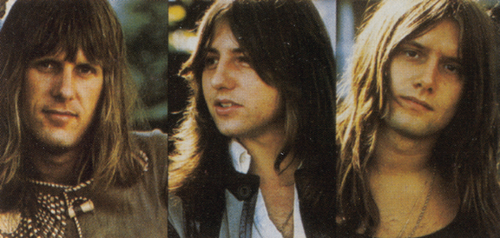
It was only upon gathering an entry for what is becoming a Majorityrights tradition at this time of year - “I Believe in Father Christmas” - that I learned belatedly of Greg Lake’s passing. A handsome English lad, he also displayed his people’s incisive thought - penetrating nefarious Jewish influence masquerading as innocence; and doing so at a time, 1975, when there was no popular tide to raise this political boat to defiantly sail despite inevitably incurring the stigma of “anti-Semitism;” with the danger attendant to that and of flying in the face of popular support from millennia of European consensus, sheepish acquiescence; the only support would have been what he could have plumbed from the truer depths of his native culture and intelligence.
European Indigenous Ethno-
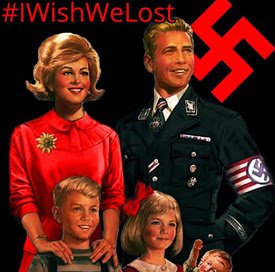
Unfortunate though I believe his hypothesis is, Morgoth has his hypothesis there. By contrast and to repeat, this Italian/Polish American doesn’t require ethno-nationalists to grant any guilt trips about Nazi Germany (whatever in particular he supposes that “I require to be granted”, I don’t know), but I do require fellow ethno-nationalists to be halfway intelligent and honest in drawing battle lines fit to the requirements of today and what we know now. Morgoth’s former picture of the week which, according to him, I wasn’t supposed to look at critically: MR has another hypothesis here. I, we, are fighting with all we can to defend all native nationalists of all of Europe - western Europe absolutely as well. In fact, they are much better off without the justifiably negative stigma and inter-European strife that came along with that regime and its imagery; on the contrary, they can signal their clear cooperation on European ethno-nationalists grounds much better without it. That’s the working hypothesis here. Poland has a unique situation to argue in nationalist terms. Having been subject to both Soviet and Nazi invasions, it is difficult for our enemies - by that, I mean the enemies of we ethnonationalists - to accuse us, by means of them, of being communists or Nazis - the usual bogey men raised to denounce nationalists. They will try to call all ethno-nationalists “Nazis”, you say? Yes, they will try, but anyone who knows the lay of the land (say, in Poland and among Poles), knows that is ridiculous (and no, the next picture of the week that Morgoth put up, of a few bald Poles making Roman salutes behind a “blood and honor” flag is not a representative pattern). With Poland having suffered among the most of those subject to Nazi invasion, nobody is going to call a true Pole “a Nazi” and have it stick in a credible way. That typical argument among White Nationalists - “they are going to call you a Nazi anyway, therefore, may as well identify as one” - doesn’t hold up. The accusation remains a problem for many, however, particularly for those of German and German American extraction. As I have said before, the guilt trip is right on top of them - and it is difficult to have perspective - one is either completely at the opposite extreme, such as Frau Merkel, or, as some tactlessly claim, one must “go directly through it” and cop to the identity completely and unabashedly. It isn’t true: but for the guilt trips and the overwhelming abuse of liberalism, one may not have perspective to see any other options. Whether for lack of perspective for overwhelming guilt trips looming upon them more directly as Germans or German Americans; or resulting from the position of those, such as Italians or Italian Americans, whose more marginal position is susceptible to disingenuous negative classification; or for a lack of empathic perspective for their ethnicity, such as the Irish, not having been particularly in the path of Nazi wrath; the overwhelming frustration pervasive liberalism’s destruction has visited upon them tends to manifest two logical fallacies: 1. Overstated premise: Hitler and Nazism necessarily represented “White people” (which, of course, they did not, but only in part). 2. False either/or: It is either Hitler and Nazism or Jewish, neo-liberal rule and its runaway. Of course cooperative ethno-nationalism is the alternative and proper way out of these illusory paradoxes. As stated above, Poles, e.g., are in a unique situation to share the relative “innocence” of their nationalist perspective with other nations and unburden them of the guilt trips laid upon them - a service in unburdening ethnonationalist Germany, in particular, of guilt trips. World War II is history and there is no sense in laying guilt trips upon subsequent generations of Germans and penalizing them. While the same would apply to virtually all nationals willing to coordinate in ethno-nationalist terms, of course, German nationalism’s recent history has been “mythologized” to the point where it is looked upon as pure evil, having had no rational reasons for its actions, operating ex-nihilo of sufficient cause - forcing would-be nationalists to lie prostrate before Jewish and liberal charges of “Nazism.” It was not ex nihilo evil; but neither does defense of Nazi Germany hold up to ethno-nationalist criteria. So, how do ethnonationalists go about correcting the hubris of liberalism which has run rough-shod over the systemic bounds that ethno-nationalism would otherwise provide for our human ecologies? And how do we look upon Nazism’s imperialist over-correction, an exponential over-reach instigated by Jewish power and influence, neo-liberal powers and some overcompensations from its war-weary neighbors? We look upon it as a history that we can all understand by analogy to many examples in our own lives when we have over-reacted to provocation - now, at our best, we look upon it as history, to learn from. And when we see that our enraged response was directed in the wrong places or without correct measure, we try to do things differently the next time similar provocations arise. Toward that measure of putting things in perspective and “demythologizing” Hitler, as it were, he is well likened to a Caesar type figure: in regard to whom people now should neither be guilty nor overwhelmingly proud. He did some things well, ok, that we can learn from, but particularly for his intra-European conflict, we should not extol him as a model: Caesar routed the Gauls - oh, good! (not). It would be ridiculous for me to expect people to shrug-that-off as a necessary cost; to say the Gauls “should just get-over it”; to say that all Europeans should affably resonate with and under Caesar’s image; and that the Germans of the Teutoburg Forest must get with the program or “just deal with” the fact that we do not have sense enough to draw new lines, with new signifiers and worldview indications, making it clear that we are European allies now..
Of course you aren’t going to make normal people and people who want to fight on proper lines, entirely copacetic with Hitler and Nazi Germany. But you don’t need to; in fact, it’s a great disservice to western nations’ ethno-nationalism, its share in the perspective on their innocence and trust thereof, a burdensome hindrance to participation in their eminent warrant of defense on ethno-nationalist grounds: because Nazism was not ethno-nationalism, not even national socialist, but imperialism in the end; and it certainly did not represent all White people and their nations. Of course we must not fall into the trap of intra-European fighting again. But that is not enough - as we all know, we must regain our martial spirit and marshal it in the correct manner. Admire and learn from aspects of war and martial prowess of the past, yes, but the most crucial lesson to be learned, and the point, is to draw correct friend / enemy lines this time; to become ethno-nationalists in cooperation and/or coordination - not to become pacificists.
We must regain the will and warrant to kill those who would kill us, you say? Indeed, that is true. But it is a martial spirit that falls in line with ethno-nationalism and regional cooperation as well. Following a line that Bowery articulated: If people will not allow for our human ecology’s discretion to exclude them, then they are abrogating freedom from (and of) association and our freedom of voluntary contract; i.e., they are treating us tantamount to slaves and we might even kill them in self defense if they will not cease and desist from that imposition - this will apply even to those who will refuse our orders of deportation and our assessment that they are to lose citizenship and/or right to abode in our ethnonations.
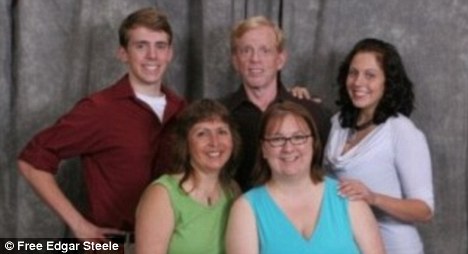
“Attorney of the damned”, author of “Defensive Racism” dies imprisoned by ZOG
“Get the story out folks” - Stan Hess From: Cyndi Steele, Sent: Thursday, September 04, 2014 8:35 PM “The past 4 years Ed and my family have been living in a nightmare. Today, my greatest fear has come to life or maybe I should say death. Please read the message below that is being posted on the Free Edgar Steele website and sent to all of his supporters as I type this. It is with great heartbreak and devastation that I send you this news.”
On June 28th this year the Daily Mail somewhat prematurely began the run up to the announcement of the death of Nelson Mandela. It ran an article which began:
I don’t know how many people like Roelof du Plessis have paid with their lives for the alleged freedom of blacks in South Africa. The number must be getting on for four thousand, not a few of them murdered in the most gratuitously savage and hateful way. There has never been a society in which blacks can live in the same society as whites by white behavioural standards without some radical form of social control being applied to them. As an egalitarian experiment South Africa was meant to prove history wrong, and in the process demonstrate that white racism was always and everywhere the underlying cause of friction between the races. The Boer Genocide in the years since stands as a terrible testimony on history’s behalf, and now, with Mandela finally gone, the world will get its answer, one way or another. Mandela is dead. Long live Orania.
I thought I should replace Graham’s somewhat florid reflections upon the passing today of Baroness Thatcher with something more considered. There will, of course, be hundreds of thousands of words written and spoken about her in the media over the next few days. Much of it will reflect the divisive impact upon British and international politics that this extraordinary woman had. I am not going to tell the story of her life, but I will offer some personal reflections upon the person and period - she was Prime Minister for eleven tumultuous years from 1979 to 1990. She had four characteristics that set her apart from the politicians about her. She was restlessly energetic, dominant, courageous, and ideological (which she called principled). All the really important moments of her career in Downing Street were expressions of one or more of these. She galvanized millions of us to admire or to hate her for it. Personally, I couldn’t bear her public mannerisms and speech because it was all so plainly produced and inauthentic. But I found her enemies to be deeply repellant, and therefore took her side in most of the battles she fought - and there were many, for she was nothing if not an agent of change. Few people had no opinion of her, and those who hated her the most, by and large, were the revolutionary socialist left and the Europhile right who expected their agendas to be followed by government without serious challenge. In her, however, they found an implacable foe, and this tendency to stand up and fight for a different, non-authorised vision in a world as cravenly pragmatic as British politics is what most ordinary folk will probably remember her for. There are several moments of her career that, while not particularly important in themselves, have stayed with me. In particular, I remember her visit to Poland in 1988 as “the Iron Lady” and an icon of the freedom of the West. She was invited to the church of St.Stanislaw Kostka in the north of Warsaw. It had been the church of a priest who inveighed against state repression from his pulpit until, in 1984, the Security Services abducted and murdered him. Hundreds of people, including the parents of the murdered priest, packed the church and the street outside to thank her for coming. When they broke into a spontaneous rendition of a Polish hymn she was unable to hold back the tears. This image of a leader moved by the sincerity and heart of the people is a near perfect figure for a true nationalist politician. Margaret Thatcher came to the door of No.10 in 1979 wittering away about harmony and St Francis of Assisi. But she was too much the courageous warrior leader and the ideologue caught up in the battle with the Labour Party, with union power, with the machinery of European integration, with the Soviets, with the Argentines, with the miners and, finally, with her own scheming ministers to understand that such unity and faith is even possible. She was no intellectual and no visionary. She used ideas that roughly fitted into her political rubric, the foremost of them the Friedmanite and Hayekian nostrums that were introduced to her by Keith Joseph in the years immediately after her accession to the leadership of the Conservative Party in 1975. She never understood that the petty freedoms she gave people were insufficient for a truly rich lived life, for she never saw people in their social context, only as putative “individuals” awaiting release from an overbearing, over-socialist state. There was a moment I recall when, early in her premiership, she used the word “flood” in relation to immigration. I thought she might actually be listening to the sentiments of her own party supporters. She did, for example, stand up for the white South African government against the diatribes of governments and international agencies everywhere. But no, the immigration issue was scarcely broached again throughout her remaining years in power, except in the context of protecting national sovereignty from the dictates of the European Commission. The battle above all others that I wanted Margaret Thatcher to fight she assiduously avoided. It is a battle which, as things stand, must be fought on the streets one day. The inevitable, existential conflict of race was something else she did not understand. Of the battles she did fight, she only lost two: to the Europe integrationists and, eventually, to the grey-suited assassins around her. We are now witnessing the slow, ineluctable coming apart of the European process and also the arising of an anti-politics which disdains the careerists of the political class. Margaret Thatcher will be shown to have been on the right side of history on most matters. She will not, I think, be remembered as the great national heroine or as the vile hate object which she succeeded, by her relentless and divisive political energy, in fashioning herself as.
A colleague of mine passed away yesterday. My relationship with him began while he was at Interval Research circa 1996. This link is to a paper of his written shortly after we met on the basis of my interest in relational over functional description.
|
|

Existential IssuesDNA NationsCategoriesContributorsEach author's name links to a list of all articles posted by the writer. LinksEndorsement not implied. Immigration
Islamist Threat
Anti-white Media Networks Audio/Video
Crime
Economics
Education General
Historical Re-Evaluation Controlled Opposition
Nationalist Political Parties
Science Europeans in Africa
Of Note MR Central & NewsComments 
|